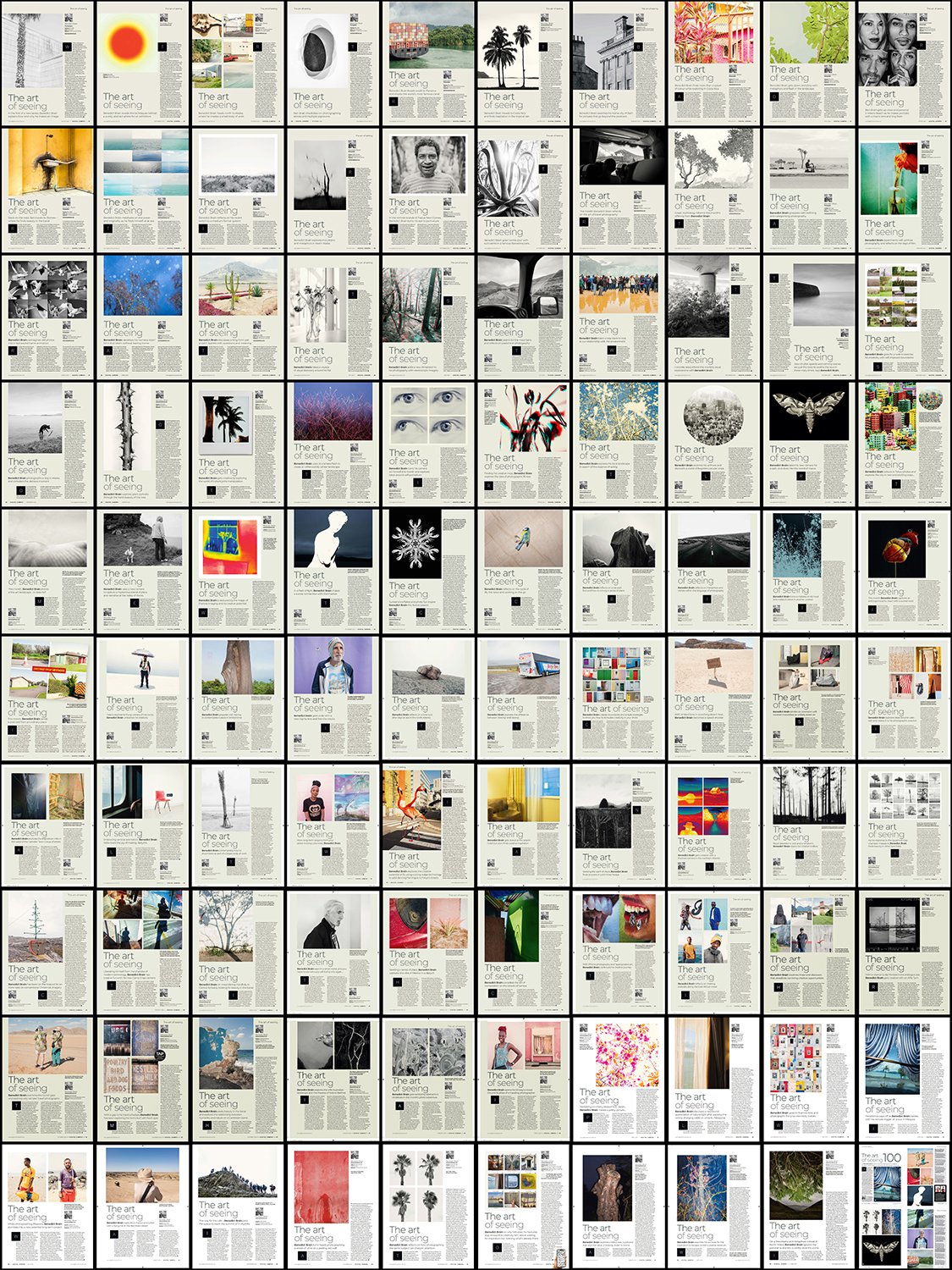
💯 THE ART of SEEING
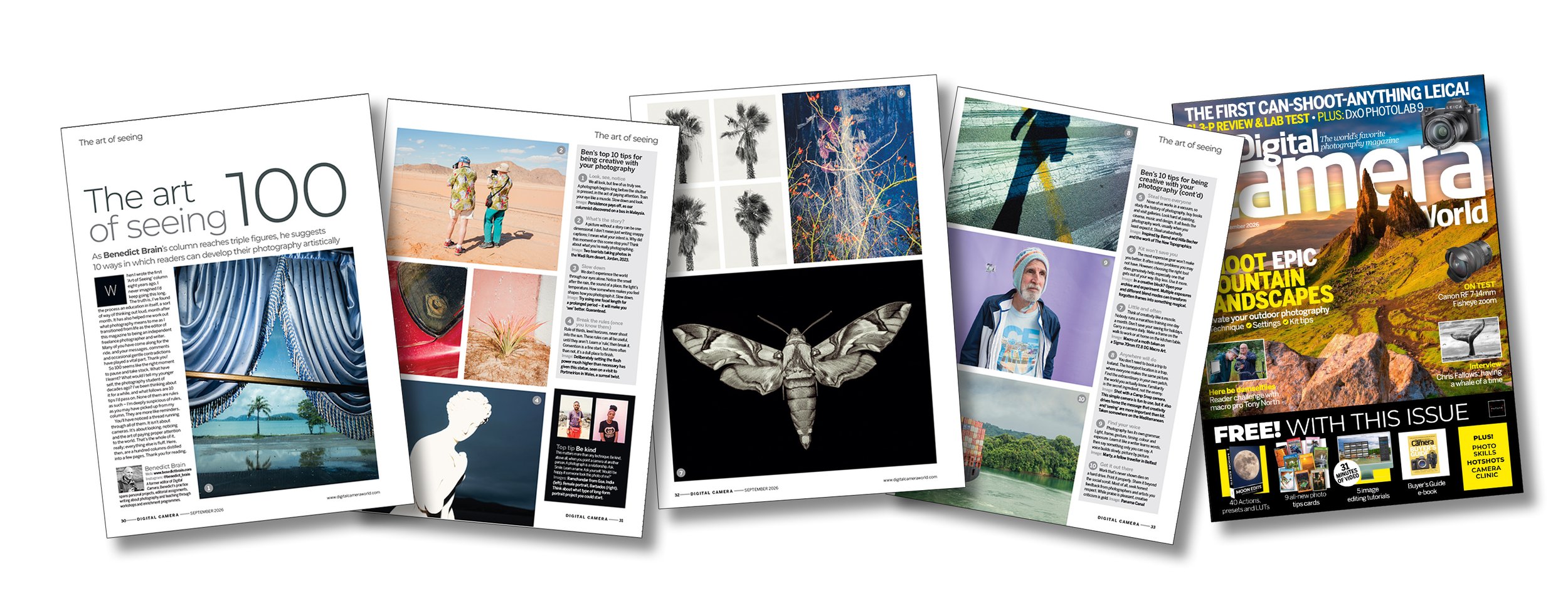
I write a monthly column called The Art of Seeing for Digital Camera magazine. I’ve been writing for about 8 years and I’ve just written the one hundredth. One hundred feels like a good moment to pause and take stock. What would I tell my younger self, the photography student of decades ago? None of what follows are rules as such; I'm deeply suspicious of rules, as you may have picked up from the column. They are more like reminders. And you'll notice a thread running through all ten: it isn't about cameras. It's about looking, noticing and the art of paying proper attention to the world. That's the whole of it. Everything else is fluff.
Here, then, are a hundred columns distilled into ten tips.
1. Look, see, notice
We all look, but few of us truly see. A photograph begins long before the shutter is pressed, in the act of paying attention. Train your eye like a muscle. Slow down and look.
2. What's the story?
A picture without a story can be one-dimensional. I don't mean just writing snappy captions; I mean what your intent is. Why did this moment or this scene stop you? Think about what you're really photographing.
3. Slow down
We don't experience the world through our eyes alone. Notice the smell after the rain, the sound of a place, the temperature of the light. How somewhere makes you feel shapes how you photograph it. Slow down.
4. Break the “rules”, once you know them
Rule of thirds, level horizons, never shoot into the sun. These rules can all be useful, until they aren't. Learn a rule, then break it. Convention is a fine start, but more often than not it's a dull place to finish.
5. Steal from everyone
None of us works in a vacuum, so study the history of photography, buy books and visit galleries. Look hard at painting, cinema, music and design. It all feeds the work, usually when you least expect it. Steal unabashedly.
6. Kit won't save you
The most expensive gear won't make you better. It often solves problems you may not have. That said, choosing the right tool does help, especially one that gets out of your way. Buy less. Use it more.
7. Little and often
Think of creativity like a muscle. Nobody runs a marathon training one day a month. Don't save your seeing for holidays. Carry a camera daily. Make a frame on the walk to work, or at home on the kitchen table.
8. Anywhere will do
You don't need to book a trip to Iceland. The honeypot location is a trap, where everyone makes the same picture. Find the extraordinary in your own patch, the world you actually know. Familiarity is the secret ingredient, not the enemy.
9. Find your voice
Photography has its own grammar. Light, frame, gesture, timing, colour and exposure. Learn it like a writer learns words, then say something only you can say. A voice builds slowly, picture by picture.
10. Get it out there
Work that's never shown dies on a hard drive. Print it properly. Share it beyond the social scroll. Most of all, seek honest feedback from photographers and artists you respect. Praise is pleasant, but creative criticism is gold.
*And one above all: be kind
This matters more than any technique. Be kind, above all, when you point a camera at another person. A photograph is a relationship. Ask. Smile. Learn a name. And ask yourself the only question that really counts: would I be happy if someone took this photo of me?
The full column, with the pictures, is in the September issue of Digital Camera magazine.